Wednesday, January 14, 2009

Can computers do scientific investigation?

I came across a 2001 paper in Science (PDF) recently that lines up with some thinking I'd been doing myself. The web is full of futuristic literature that envisions man's intellectual legacy being carried forward by computers at a greatly increased pace; this is one of the ideas covered under the umbrella term "technological singularity".

In machine learning there are lots of approaches and algorithms that are relevant to the scientific method. The ML folks have long been working on the problem of taking a bunch of data and searching it for organizing structure. This is an important part of how you would formulate a hypothesis when looking at the bunch of data. You would then design experiments to test the hypothesis. If you wanted to automate everything completely, you'd run the experiment in a robotic lab. Conceivably, science could be done by computers and robots without any human participation, and that's what the futurists envision.

The Science paper goes into pretty deep detail about the range and applicability of machine learning methods, as things stood in 2001. I find ML an interesting topic, but I can't claim any real knowledge about it. I'll assume that somebody somewhere can write code to do the things claimed by the paper's authors. It would be fascinating to try that myself some day.

To bring this idea closer to reality, what we need is a widely accepted machine-readable representation for hypotheses, experiments, and experimental results. Since inevitably humans would also participate in this process, we need representations for researchers (human, and possibly machine) and ratings (researcher X thinks hypothesis Y is important, or unimportant, or likely to be true, or likely to be false). So I have been puttering a little bit with some ideas for an XML specification for this sort of ontology.

Specifying experiments isn't that tricky: explain what equipment and conditions and procedure are required, and explain where to look for what outcome, and say which hypotheses are supported or invalidated depending on the outcome. Experimental results are likewise pretty simple. Results should refer to the experiments under test, identifying them in semantic web style with a unique permanently-assigned URI.

The tricky part is an ontology for scientific hypotheses. But you then need a machine-readable language flexible enough to express complex scientific ideas, and that's potentially challenging. Besides, some of these ideas are naturally expressible in ways humans can easily get, but in ways difficult for machines, for instance almost anything involving images.

Nevertheless an XML specification for describing hypotheses, experiments and results in a machine-readable way would be very interesting. I'm inclined to do some tinkering with all that, in my ridiculously abundant free time. Maybe I'll manage it.


Monday, December 29, 2008

Graphene memory device at Rice University

James Tour and colleagues at Rice University have demonstrated a switch (described in Nature Materials) composed of a layer of graphite about ten atoms thick. An array of such switches can be built in three dimensions, offering very high densities of storage volume, far exceeding what we now see in hard disks and flash memory USB widgets. The switch has been tested over 20,000 switching cycles with no apparent degradation. The abstract of the Nature Materials article reads:
Transistors are the basis for electronic switching and memory devices as they exhibit extreme reliabilities with on/off ratios of 104–105, and billions of these three-terminal devices can be fabricated on single planar substrates. On the other hand, two-terminal devices coupled with a nonlinear current–voltage response can be considered as alternatives provided they have large and reliable on/off ratios and that they can be fabricated on a large scale using conventional or easily accessible methods. Here, we report that two-terminal devices consisting of discontinuous 5–10 nm thin films of graphitic sheets grown by chemical vapour deposition on either nanowires or atop planar silicon oxide exhibit enormous and sharp room-temperature bistable current–voltage behaviour possessing stable, rewritable, non-volatile and non-destructive read memories with on/off ratios of up to 107 and switching times of up to 1 μs (tested limit). A nanoelectromechanical mechanism is proposed for the unusually pronounced switching behaviour in the devices.
It will be several years before memories based on these switches are available for laptops and desktops, but it's a cool thing. To my knowledge, the mechanism is not yet known, so there may be some interesting new science involved as well.

Picasa images in blog posts

Here is an example of embedding a Picasa image in a Blogspot posting. I am including this to assist another blogger who is doing some interesting RepRap-related work but who's had a bit of trouble with Blogspot. To do this, I got the URL for the Picasa image by right-clicking on "View image" in Firefox so that I only had the image in the browser, and I used that in the "Add Image" thing in the "New post" top bar menu.

The HTML for this post (in part) looks like this:
<a onblur="try {parent.deselectBloggerImageGracefully();} catch(e) {}" href="http://lh6.ggpht.com/_Wq8BeMor5IQ/SVhFkzHai5I/AAAAAAAAACs/bnOuWjpyhIw/s640/SilicateGlueIngredients.jpg"><img style="margin: 0pt 0pt 10px 10px; float: right; cursor: pointer; width: 267px; height: 200px;" src="http://lh6.ggpht.com/_Wq8BeMor5IQ/SVhFkzHai5I/AAAAAAAAACs/bnOuWjpyhIw/s640/SilicateGlueIngredients.jpg" alt="" border="0" /></a>Here is an example of embedding a Picasa image...

I hope this helps. It shouldn't be necessary to study the HTML. If the Blogspot controls are cooperative, it should be generated automatically. If they don't cooperate, the HTML could be cut and pasted.

Tuesday, December 23, 2008

Encouraging news about mechanosynthesis

Yesterday there was a very encouraging posting (by guest blogger Tihamer Toth-Fejel) on the Responsible Nanotechnology blog, regarding recent goings-on with mechanosynthesis. What the heck is mechanosynthesis? It is the idea that we will build molecules by putting atoms specifically where we want, rather than leaving them adrift in a sea of Brownian motion and random diffusion. Maybe not atoms per se, maybe instead small molecules or bits of molecules (a CH3 group here, an OH group there) with the result that we will build the molecules we really want, with little or no waste. The precise details about how we will do this are up for a certain amount of debate. We used to talk about assemblers, now we talk about nanofactories, but the idea of intentional design and manufacture of specific molecules remains.

The two items of real interest in the CRN blog posting are these.

First, Philip Moriarty, a scientist in the UK, has secured a healthy chunk of funding to do experimental work to validate the theoretical work done by Ralph Merkle and Rob Freitas in designing tooltips and processes for carbon-hydrogen mechanosynthesis, with the goal of being able to fabricate bits of diamondoid that have been specified at an atomic level. If all goes well, writes Toth-Fejel:
Four years from now, the Zyvex-led DARPA Tip-Based Nanofabrication project expects to be able to put down about ten million atoms per hour in atomically perfect nanostructures, though only in silicon (additional elements will undoubtedly follow; probably taking six months each).
Second is that people are now starting to use small machines to build other small machines, and to do so at interesting throughputs. An article at Small Times reports:
Dip-pen nanolithography (DPN) uses atomic force microscope (AFM) tips as pens and dips them into inks containing anything from DNA to semiconductors. The new array from Chad Mirkin’s group at Northwestern University in Evanston, Ill., has 55,000 pens - far more than the previous largest array, which had 250 pens.
So there are two take-home messages here. First, researchers are getting ready to work with the large numbers of atoms needed to build anything of reasonable size in a reasonable amount of time. Second, this stuff is actually happening rather than remaining a point of academic discussion.

Toth-Fejel writes:
What happens when we use probe-based nanofabrication to build more probes? ...What happens when productive nanosystems get built, and are used to build better productive nanosystems? The exponential increase in atomically precise manufacturing capability will make Moore’s law look like it’s standing still.
Interesting stuff.

Monday, December 08, 2008

Cui's work on cancer with granulocytes


Granulocytes are a particular sort of white blood cell. Read the original New Scientist article or a related article in Science Daily. See a video of granulocytes attacking cancer cells. The video above is a talk by the primary investigator, Zheng Cui. I learned about this in stumbling across the fact that Chris Heward is seeking granulocyte donors.

Zheng Cui at Wake Forest University of Medicine in Winston-Salem, North Carolina, took blood samples from more than 100 people and mixed their granulocytes with cervical cancer cells. While granulocytes from one individual killed around 97 per cent of cancer cells within 24 hours, those from another healthy individual only killed around 2 per cent of cancer cells. Average cancer-killing ability appeared to be lower in adults over the age of 50 and even lower in people with cancer. It also fell when people were stressed, and at certain times of the year. "Nobody seems to have any cancer-killing ability during the winter months from November to April," says Cui.

Elsewhere, Cui wrote: "In 1999, we encountered a unique mouse that refused to succumb to repeated challenges with lethal cancer cells that uniformly killed all other laboratory mice, even at much lower doses. Further studies of this phenotype reveal that this unusual cancer resistance is inheritable and entirely mediated by the macrophages and neutrophils of the innate immunity. Transfer of leukocytes with this high level of cancer-killing activity (CKA) from these cancer-resistant mice cures the most aggressive advanced cancers in other mice without any side effect. Most surpisingly, a similar activity of killing cancer cells was discovered in the granulocytes and monocytes of some healthy people." When applied clinically, this is called LIFT, or "leukocyte infusion therapy".

Cui readily admits that he has not yet done much to explore the precise mechanisms involved. For the present, he is more interested in getting the treatment through clinical trials and into clinical practice. So he has gotten very little support from the medical community, and it's been difficult to secure funding for clinical trials.

Friday, December 05, 2008

Adventures in protein engineering

Proteins are a good material to consider for an early form of rationally designed nanotechnology. They are cheap and easy to manufacture, thoroughly studied, and they can do a lot of different things. Proteins are responsible for the construction of all the structures in your body, the trees outside your window, and most of your breakfast.

Why don't we already have a busy protein-based manufacturing base? Because the necessary technologies have arisen only in the last couple of decades, and because older technologies already have a solid hold on the various markets that might otherwise be interested in protein-based manufacturing. Finally, most researchers working with proteins aren't thinking about creating a new manufacturing base. But people in the nanotech community are thinking about it.

One of the classical scientific problems involving proteins is the "protein folding problem". Every protein is a sequence of amino acids. There are 20 different amino acids, which are strung together by a ribosome to create the protein. As the amino acids are strung together, the protein starts folding up into a compact structure. The "problem" with folding is that for any possible sequence of amino acids, it's not always possible to predict how it will fold up, or even whether it will always fold up the same way each time.

But maybe you don't need a solution for all possible sequences. Maybe you can limit yourself to just the sequences that are easy to predict. People have been studying proteins for a long time and it's easy to put together a much shorter list of proteins whose foldings are known. Discard any proteins that sometimes fold differently, to arrive at a subset of proteins whose foldings are well known and reliable.

The next issue is extensibility. Having identified a set of proteins whose foldings are easily predictable, would it be possible to use that knowledge to predict the foldings of larger novel amino acid sequences? A trivial analogy would be that if I know how to pronounce "ham" and I know how to pronounce "burger", then I should should know how to pronounce "hamburger". A better analogy would be Lego bricks or an Erector set, where a small alphabet of basic units can be used to construct a vast diversity of larger structures.

If we can build a large diversity of big proteins and predict their foldings correctly, we're on to something. Then we can design things with parts that move in predictable ways. Some proteins (like the keratin in your fingernails or a horse's hooves) have a good deal of rigidity, and we can think about designing with gears, cams, transmissions, and other such stuff.

Thursday, November 20, 2008

Gustav Mahler's Symphony No. 4 in G major

http://en.wikipedia.org/wiki/Symphony_No._4_(Mahler)
performed by the Vienna Philharmonic Orchestra (Wiener Philharmoniker), conducted by Leonard Bernstein
  • 1st movement (1, 2)
  • 2nd movement (1)
  • 3rd movement (1, 2, 3)
  • 4th movement (1)

Friday, November 07, 2008

Cell-level simulation and hobbyist participation

These are a few simulators for biological cells and processes.
A lot of the important things that happen in medicine are happening at the cellular level. Cell-level simulators might provide a way for large numbers of hobbyist medical researchers to construct and test hypotheses. The most promising hypotheses might be testable in real biology laboratories, and the results could be fed back to improve the accuracy of the simulators.

I'm not sure this would be an effective strategy for hastening the pace of medical progress. My intuition is biased because I've spent the last fifteen years working with open-source software (Linux, Apache, etc). I recognize that competition and profit are also powerful forces driving the rate of innovation, and that these seem to work best when people aren't sharing information so readily. The software/internet world has seen lots of progress in the last ten or twenty years, and it seems that a mixed environment with both open-source and closed-source approaches has pushed things along well.

Software is difficult but biology is much more difficult. At least it looks that way from my software engineer's point of view. The depth of expertise required for meaningful contribution to medical knowledge will likely exclude most would-be contributors. I don't know what to do about that. Perhaps cell simulators and on-line information can make that expertise more accessible.

Participation by hobbyists has become a very big part of the astronomy community. Maybe there is a legitimate place for hobbyists in the field of medical research.

Thursday, November 06, 2008

First post

Here is today's nifty piece of medical progress, an advance in the fight against cancer. A couple years ago, an unfortunate woman died of acute myelogenous leukemia, leaving behind samples of her cells, some healthy and some cancerous. A team at Washington University in St. Louis was able to sequence the DNA from the cells and compare her healthy DNA to her cancerous DNA. This became possible because the price of DNA sequencing equipment has come down by a very large factor in recent years.

They identified ten point mutations that differentiated the sick cells from the healthy ones. Two of the mutations were already known from earlier research, the other eight mutations were previously unknown. The team is continuing to study differences in the non-coding DNA as well, and they are also preparing to apply the same sequencing methodology to other cancers.

Because they were using DNA samples all from the same person, there would be very few differences among the healthy cells, just the infrequent cell-to-cell mutations that might occur in an average healthy person's body. So they had a good solid statistical baseline that made the ten cancer-related mutations really clear.

It may be years before this translates into clinical practice that saves lives. But it's nevertheless an important advance. It's something that has never been done before, and it does bring to light a few new facts. It looks strongly like point mutations are the cause of at least some, possibly all, cancers. We strongly suspected that before but this almost proves it. One of the ten mutations was present in only a fraction of the cancerous cells, suggesting that the mutations typically occur in a particular sequence, with the last one finally making the cell dangerous.

I'm interested in what social and economic factors could most hasten the rate of medical progress. My reason for this interest is simple: I'm not young any more. I'm curious about whether the development model that has been so successful for open-source software could somehow be applied to quicken the pace of medical progress.

Wednesday, September 03, 2008

Beethoven on Youtube

I've long been a fan of Beethoven's Violin Concerto (1, 2, 3). Here it is played by Yehudi Menuhin.

I also like some of the symphonies. Here's Herbert von Karajan conducting the Seventh Symphony, which I think doesn't get enough attention by comparison to the Third (1, 2, 3? 4?) or the Fifth or the Ninth (1, 2, 3a, 3b, 4). Why is it the only even-numbered Beethoven symphony you ever hear is the Sixth? In fact, none of Beethoven's power-of-two symphonies (numbers 1, 2, 4 and 8) get much airplay. Wierd.

Monday, August 25, 2008

Bach on YouTube

Brandenburg Concerto number 3, probably my favorite: first movement, second movement, third movement. For the third Brandenburg, Bach didn't really write a second movement. He just wrote a couple of chords and allowed the musicians to improvise whatever they wanted within that minimal harmonic constraint. Different groups do different things with that freedom. The first time I heard this concerto was Walter Carlos's rendition on the Switched-on Bach album back in the seventies, which included a lot of interesting sounds that people now associate with old bad sci-fi movies. But at the time, Carlos was one of the first explorers of electronic music and there wasn't yet an esthetic for it. In a later recording Carlos did something a bit more conventional, a minimal expansion on Bach's two chords with just a few flourishes.

One thing I never quite got about the first Brandenburg (first, second, third, fourth movements) is some funny work in the horns in the first movement. There are points where they just seem off-tempo with everybody else. When I first heard this I assumed the musicians had gotten lost. But now I'm hearing it in this second recording, so I have to conclude that Bach wrote it that way. Maybe he was trying to make sure the listener was awake? Perplexing.

I once read a review of the sixth Brandenburg (first, second, third movements) suggesting that it was a musical description of goings-on in the Bach household. Bach had lots of kids, all presumably running and bouncing about as kids will do, and this is a very busy concerto with a lot happening. So that might be what Bach had in mind, and it especially sounds that way in the third movement which has a real bounce to it. In this recording the cellos (maybe basses? I'm never sure) at the right end seem to have many more than four strings.

Tuesday, August 12, 2008

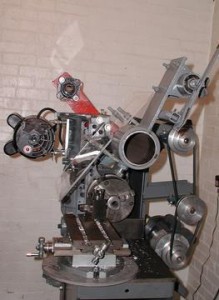
Multimachine

Multimachine, built by Pat Delany of Palestine, Texas, is an inspiring project. It is...
a humanitarian, open source machine tool project for developing countries... The MultiMachine all-purpose machine tool can be built by a semi-skilled mechanic with just common hand tools. For machine construction, electricity can be replaced with "elbow grease" and the necessary material can come from discarded vehicle parts. What can the MultiMachine be used for in developing countries?
AGRICULTURE...
WATER SUPPLIES...
FOOD SUPPLIES: Building steel-rolling-and-bending machines for making fuel efficient cook stoves and other cooking equipment...
TRANSPORTATION...
EDUCATION...
JOB CREATION...
The project is open source and thoroughly documented. It uses commonly available pieces. It seeks explicitly to address the needs of the developing world. It recognizes the work people did in this area (1, 2) in years past. Cool stuff. We have all kinds of Industrial Revolution era mill buildings in the greater Boston area and this would fit right in.

Frostbot, the work of Brian Schmalz, is another food fabber. It's designed to frost cookies. The CNC mechanism is from Fireball CNC. Brian's other tinkerings include a cool USB bit-whacking board available at Sparkfun.

Monday, July 21, 2008

3d printer project at Victoria University of Wellington School of Design

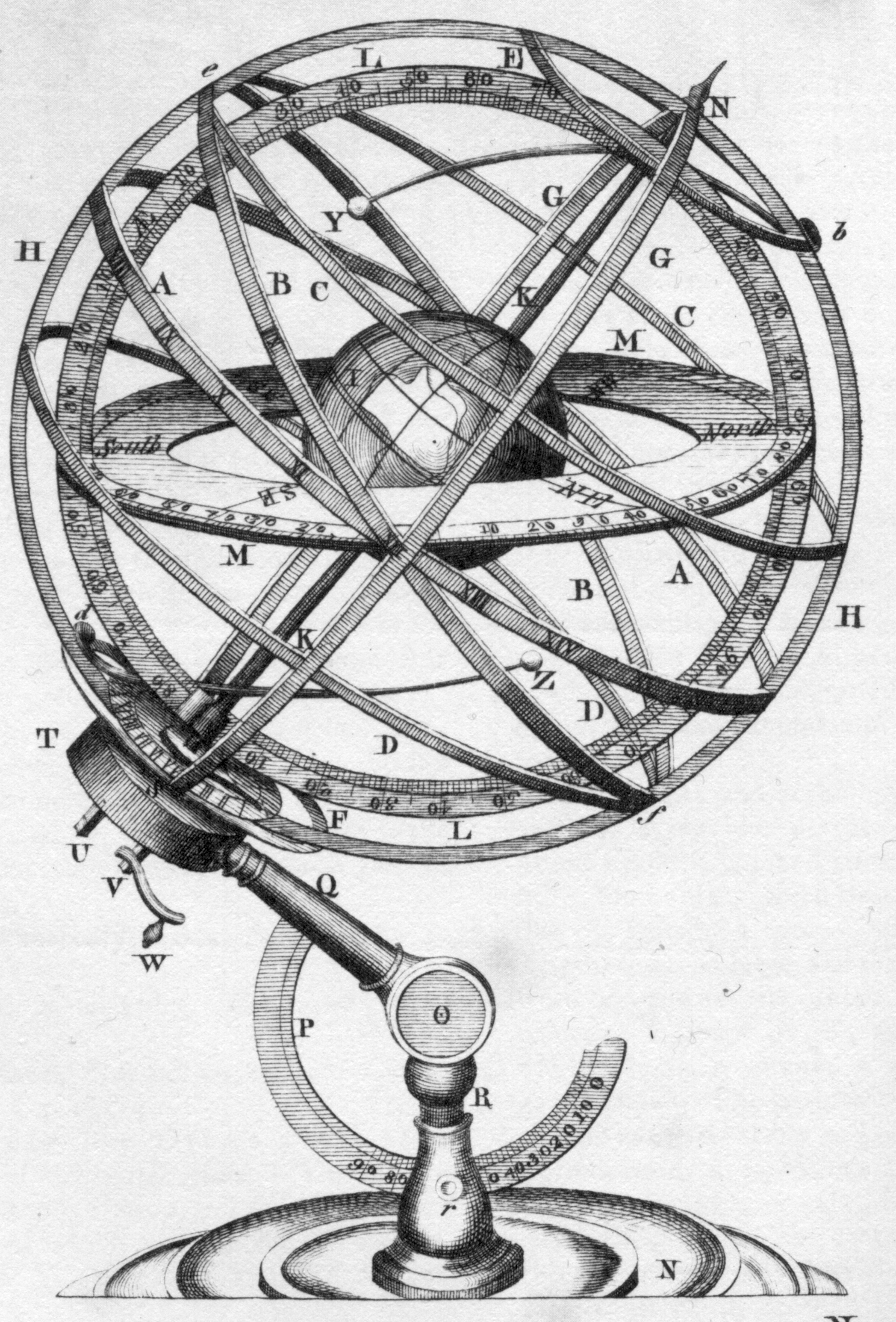
There was recently a design contest at VUW School of Design to create inexpensive 3d printers. Apparently Ponoko had some involvment, possibly a sponsorship. I found the prettiest printer to be the Equinox, which also was designed to be environmentally friendly, using a lens to focus sunlight to dry recycled paint as a printing process. I was going to say the printer itself looks like an astrolabe, but it really looks like an armillary sphere, a sort of 3D astrolabe.


There's a high-res photo (low-res version below) that shows some of the mechanics, which were laser-cut on Ponoko. I am very much hoping that the university and/or students will publish the plans for the Equinox. It's very cool that people can use a service like Ponoko to build their own printers.

Very slow progress on my CNC mill. I finally purchased the 3-axis Xylotex controller. It is my hope to connect it this evening and conceivably mill a piece of wood. So I need to move a PC to where the mill is, run a network cable, load the PC with EMC and configure it, and set up the shop-vac to collect sawdust. I'll mount the Xylotex board and power supply and fan on the side of the mill, but that's for later.

Wednesday, July 02, 2008

Penny wise, pound foolish

I got the idea that I should try to design and build my own electronics. I've done electronics design before, including microcontrollers and FPGAs and the like, but I have little experience with power electronics. That, and I'm impatient. The upshot is that after wasting about three weeks and a few hundred dollars in trying to control stepper motors, I'm not much further ahead. Here is the affordable pre-packaged solution (which had been recommended by the guy who sold me the mechanics) which I should have used from the start:
So I'll plan to pick up a 3-axis controller and run it with LinuxCNC. Apparently TurboCNC is also very popular but I'm not about to run DOS on any machine that could be running Linux.

The mechanics cost about $300 including shipping. The steppers cost $75 (I got them from RRRF). This stepper controller will run maybe $225 with shipping, so the whole thing is $600. That's reasonable. Obviously it doesn't include waste.

I'm thinking it would be fun to fool with Python code that generates G code and sends it to the CNC. I could develop a repertoire of programmatically defined shapes.

Friday, June 06, 2008

RepRap replicates, and Will gets a New Toy

On the left is Adrian Bowyer, the University of Bath professor who started the RepRap project. On the right is Vik Olliver, the most active RepRap builder on the planet. The two machines marked "parent" and "child" are RepRap 3D printers with the interesting relationship that the "child" was mostly built by the "parent". This is a HUGE STEP toward Bowyer's vision wherein RepRaps make more RepRaps and humans benefit. This will do for physical goods what the GPL and Linux and Apache have done for software.

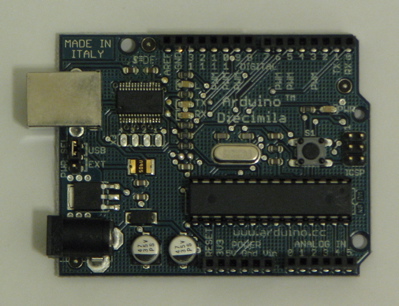
My own news is, at least locally, equally exciting. My CNC mill has finally arrived! And I also got an Arduino controller. I've got my stepper motors from RRRF, and a Harbor Freight router is on the way. It's going to take time to put everything together, and of course there's very little spare time in the life of a modern adult.

Once the CNC mill is up and running, I plan to work on a scheme for swapping out the router and swapping in an extruder for thermoplastic. By that time the RepRap guys will be doing even better than they're doing today, so I will benefit from their stuff. Maybe I'll end up making an actual RepRap before I'm through.

Thursday, May 29, 2008

RepRap: Big step up in print quality!

This posting on the RepRap blog shows the massive progress these guys have made recently in their printing quality. The progression is clearly visible in this photo of some door handles. The most recent incarnation is the work of a guy known as "Nophead", with his own blog describing his work. His machine uses a RepRap extruder on a purchased CNC table rather than the RepRap 3D platform, which made me think that the RepRap platform must be the reason for the less-than-commercial-grade print quality. I asked him about this in a comment, and he replied that the improvements were:
  • his extruder has a shaft encoder to control the speed precisely
  • he has temperature control to +/- 3C
  • he doesn't have any comms delays (I don't know the architecture well enough to know exactly what he means here)
  • he runs his head faster so as to stretch the filament down to 0.5mm.
  • careful choice of printing material
To conclude, he says "All these things can be sorted out on Darwin [the current RepRap prototype] so I expect its prints to be this good in a month or two." That's a very cool thing. It's wonderful to see such progress.

Within just a year or two, RepRap will be much further along in terms of both quality and ease of use, and it will be affordable for small clubs in high schools and colleges all over the world, and large numbers of individual hobbyists. By then it will probably print multiple materials including conductive ones, so you'll be able to embed circuitry in a widget. Today one of the big killer apps for 3D printers is little action figures based on avatars from Second Life and similar games, but when 3D printers really are ubiquitous, people will move on to far more interesting apps that I can hardly imagine.

Let me not forget this very nice list of a lot of different commercial and hobbyist 3D printers.

Still waiting for my CNC mill platform, the eBay fellow has been getting a huge volume of business and his shop is a bit swamped. I've been getting a bit more organized with the electronics, including resuscitating an old FX2 board design, and I've ordered some stepper motor driver parts that should arrive soon.

Wednesday, May 07, 2008

Affordable CNC gadgets

CNC has existed as a hobbyist pursuit much longer than 3D printers have been. I finally broke down and purchased one of these on eBay. It will take a couple weeks to arrive, and the one I got did not include stepper motors, couplers, or motor drive electronics. Those are things I'd enjoy doing myself anyway, so no problem.

I like this project which is along similar lines.

For my own gadget, I need to order stepper motors, think about couplers, and start planning how the electronics will go together. I'm thinking about being lazy and using the parallel port.

I got to see a real RepRap up close!

This evening I went to a presentation and demonstration of a real live RepRap by Bruce Wattendorf and his son. It was very cool to meet somebody who's built a real one and is totally up to speed on every aspect of the project. I asked some questions about the long-term future of the RepRap project.
  • Can they get much better spatial resolution without compromising the social goal of serving the developing world? Yes: better spatial resolutions can be gotten with finer nozzles, which would print slower. You could build a duel-nozzle gadget with a wide nozzle for fast clumsy printing, and a narrow fine nozzle for slow elegant finishing.
  • Will they bump into patent problems as they move toward the state of the art currently occupied by commercial 3D printers? A number of patents will expire in about three years and the RepRap guys will then be much freer in this area.
He wrapped up his presentation by showing the nanofactory video, "Productive Nanosystems: from Molecules to Superproducts". I came to 3D printers from an interest in nanotech, and he came to nanotech from working on 3D printers. It was gratifying to see that the similarity is clear to people on the other side of the fence.

It was a heck of a lot of fun. I took some pictures. Bruce also has many more pictures on his blog. Interestingly, the parts that are normally plastic in a RepRap are made of wood in Bruce's machine, and he's in the process of printing a set of plastic parts.

Bruce's talk was sponsored by a group called DC401, a bunch of Rhode Island folks who enjoy going to DefCon. They are working with a woman in real estate to arrange a lab space in a building in downtown Providence where they can do electronic and mechanical tinkering. It was fascinating to hear her talk about how she's making it all work by using the other floors for businesses and residential space. This reminds me a lot of MITERS, and it warms my heart.

Tuesday, May 06, 2008

More developments in cancer treatment

Here are some more new cancer therapies under development. Many of these involve some flavor of nanoparticle (a fancy word for a molecule), and a few involve nanomachines (a molecule that does something more interesting than just sitting there).
  • http://www.technologyreview.com/Nanotech/18999/ -- The new nanoengineered system, designed by physician and researcher James Baker and his colleagues at the University of Michigan, contains gold nanoparticles with branching polymers called dendrimers that sprout off the nanoparticle's surface. The particles could be used to launch a multiprong attack against tumors. The dendrimer arms can carry a number of different molecules, including molecules that target cancer cells, fluorescent imaging agents, and drugs that slow down or kill the cells. Once enough of the nanoparticles have gathered inside cancer cells, researchers could kill the tumors by using lasers or infrared light to heat up the gold nestled inside the dendrimers.
  • http://www.technologyreview.com/NanoTech/wtr_16690,319,p1.html -- A single treatment of drug-bearing nanoparticles effectively destroys prostate cancer tumors in mice ...the researchers mix together a prostate cancer drug (docetaxel) and polymers that are already FDA-approved... The polymer formed spheres with the drugs trapped within. The researchers then chemically attach pieces of RNA, called aptamers, to the surface of the spheres. The RNA folds into shapes that fit into complementary structures on the surface of prostate-cancer cells... [In placebo groups] almost all the mice died during the experiment. In contrast, all of the mice injected with the targeted nanoparticles survived, and in most cases (five out of seven) the tumors disappeared.
  • http://www.rsc.org/publishing/journals/CC/article.asp?doi=b800528a -- We present experimental data that demonstrate the potential of synthetic crown ether modified peptide nanostructures to act as selective and efficient chemotherapeutic agents that operate by attacking and destroying cell membranes.
  • http://www.eurekalert.org/pub_releases/2008-03/uoc--urd033108.php -- Researchers from the Nano Machine Center at the California NanoSystems Institute at UCLA have developed a novel type of nanomachine that can capture and store anticancer drugs inside tiny pores and release them into cancer cells in response to light... the device is the first light-powered nanomachine that operates inside a living cell... [reported on] March 31 in the online edition of the nanoscience journal Small.
  • http://mednews.wustl.edu/news/page/normal/11449.html -- The nanoparticles are extremely tiny beads of an inert, oily compound that can be coated with a wide variety of active substances. In an article published online in The FASEB Journal, the researchers describe a significant reduction of tumor growth in rabbits that were treated with nanoparticles coated with a fungal toxin called fumagillin. Human clinical trials have shown that fumagillin can be an effective cancer treatment in combination with other anticancer drugs... the nanoparticles' surfaces held molecules designed to stick to proteins found primarily on the cells of growing blood vessels. So the nanoparticles latched on to sites of blood vessel proliferation and released their fumagillin load into blood vessel cells. Fumagillin blocks multiplication of blood vessel cells, so it inhibited tumors from expanding their blood supply and slowed their growth.
  • http://nano.cancer.gov/news_center/2008/feb/nanotech_news_2008-02-15c.asp -- ...Regulators and drug developers are concerned that these delivery systems may prove difficult to manufacture on a consistent basis... A new study from James Baker, Jr., M.D., PI, Cancer Nanotechnology Platform Partnership at the University of Michigan, and colleagues provides data showing that such concerns can be overcome... the investigators present the results of studies designed to show that they could achieve consistent and specific targeting and cell-killing activity across multiple manufacturing batches of a dendrimer-based therapeutic agent.
  • http://www.physorg.com/news82653370.html -- A team of investigators has designed a nanoscale, polymeric drug delivery vehicle that when loaded with a widely used anticancer agent cures colon cancer in mice with a single dose... To create their drug delivery vehicle, the investigators used a highly branched polymer, known as a dendrimer, that naturally forms nanoparticles with myriad sites for drug loading. In this particular case, the researchers created what they call a bow-tie polyester dendrimer, whose molecular structure somewhat resembles a bow-tie with two discrete halves... On one half of the dendrimer, the researchers attached a second polymer, poly(ethylene glycol) (PEG), in order to make the dendrimer water soluble... Next, the investigators attached the anticancer drug doxorubicin to the other half of the dendrimer using a chemical linkage designed to break when exposed to acidic conditions. Not coincidentally, the inside of tumor cells is acidic, while the bloodstream has a neutral pH. Results presented in this paper show that the resulting drug-dendrimer formulation releases virtually all of its drug within 48 hours in acidic conditions but less than 10 percent of its payload at neutral pH.
  • http://www.azonano.com/news.asp?newsID=4087 -- A new type of cancer detector... the simple and inexpensive system, which can be built from off-the-shelf components, can rapidly detect the presence of cancer biomarkers – telltale proteins in body fluids that can signal the presence of malignant tumors – at very low levels... “With this technology, a future scenario might be that you go to the doctor every year for an annual checkup; he draws about 10 cc’s of your blood and runs it through our machine,” said Soman. “The machine is equipped to detect the biomarkers for all the common types of cancer. Half an hour later it produces a list of the biomarkers that it has found. And then either a software program or the physician examines this list to determine whether you have any cancers that need treating.”
  • http://nanotechwire.com/news.asp?nid=4703 -- There is a growing recognition among cancer researchers that the most accurate methods for detecting early-stage cancer will require the development of sensitive assays that can identify simultaneously multiple biomarkers associated with malignant cells. Now, using sets of nanoparticles designed to aggregate in response to finding more cancer biomarkers, a team of researchers funded by the Alliance for Nanotechnology in Cancer has developed a multiplexed analytical system that could detect cancer using standard magnetic resonance imaging (MRI).
  • http://www.forbes.com/claytonchristensen/2008/02/22/cancer-nanotechnology-therapies-lead-clayton-in_jw_0222claytonchristensen_inl.html -- A survey of several different developments, but not much deep discussion of any of them. More of a businessman's-eye view of things, not too surprising for Forbes.

Sunday, April 27, 2008

TAT variant with magnetic particles

My last posting about targeted alpha therapy discussed the expense of preparing a sample of radioactive actinium, aside from which, targeted alpha therapy should be a very effective and specific and hopefully affordable cancer therapy. Quentin Pankhurst of the London Centre for Nanotechnology has been working with particles of iron oxide, which has very low toxicity and can be attached to antibodies just like the actinium atoms in cages. Iron oxide can be magnetized so each particle can be a permanent magnet. A magnetized particle can then be detected from outside the body using a weak EM field generated by a hand-held device, or it can be heated with a strong EM field, to the point of destroying the cancer cell .

By combining the iron oxide particle with an antibody for the HER2 protein found in breast cancer cells, Pankhurst should be able to achieve the same specificity and effectiveness that Sloan-Kettering has gotten with radioactive actinium, at vastly lesser cost. In order to commercialize this and related applications, Pankhurst has founded Endomagnetics, a start-up based in Houston, Texas.

Why should iron oxide be so much less expensive than radioactive actinium? "Iron oxide" is the chemical name for rusty metal, which is easy to make and store, and readily available in auto scrap yards everywhere. Actinium-225, the isotope used for TAT, has a half-life of ten days, so you can't make a big batch and store some for later use. According to this website at the Oak Ridge National Laboratory: "The actinium-225 is formed from radioactive decay of radium-225, the decay product of thorium-229, which is obtained from decay of uranium-233. The National depository of uranium-233 is at ORNL, and we have developed effective methods for obtaining thorium-229 (half-life 7340 years) as our feed material to routinely obtain actinium-225."